The Parking Space Test: Picture the Scooter at Home Before You Choose
Before comparing scooters, trace the route from the street to storage and through an ordinary day. Simple checks can reveal whether a scooter will fit your home and routine.
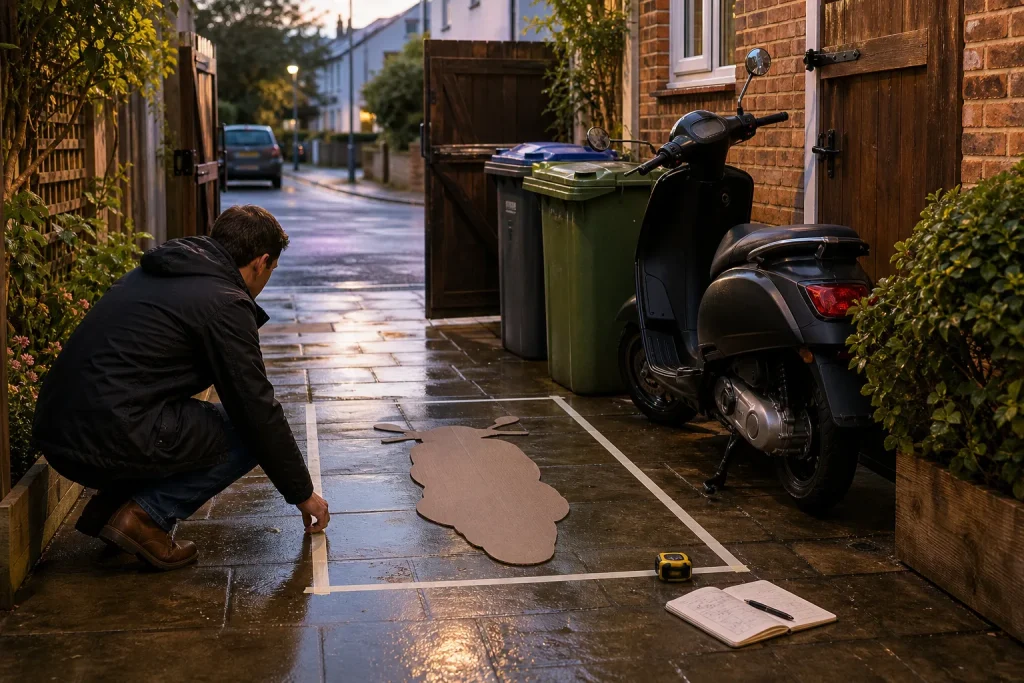
Will a scooter fit through your gate, and will getting it in and out still feel manageable on a wet evening? Before comparing models, check the storage space and the route to it. A scooter that suits your journey but blocks a doorway or catches on the bins is not a practical choice.
Trace the route
Start where you expect to store the scooter: a garage, a permitted bay, a side passage or another suitable spot. Walk the whole route from the street. Note gates, steps, tight turns, uneven paving and places where a neighbour’s bin or parked car could narrow the way.
Use masking tape to mark a possible parking area. A cardboard outline can help you visualise the space, but it cannot confirm a model’s dimensions. Leave room for the handlebars, for you to stand beside the scooter and for doors or storage lids to open. If you rent or share the space, check the rules and ask before using a communal area.
Do not assume a compact-looking scooter will be easy to push. A slope, tight turn or slippery surface can make moving it awkward. Ask a dealer how the exact model is moved with its engine off, and consider whether you can manage that route comfortably.
Check daily access
Visit the entrance at the time you would usually come home. Can you see the way in when it is dark? Is there a high threshold, busy driveway or gate that must be unlocked while you manage your belongings?
Walk the route carrying your usual work bag or shopping. Look for a safe place to put things down while opening the gate, and a dry spot for your helmet. These small details can make the routine easier to manage.
If the route passes through a shared lane, consider who else uses it. A parking spot must not obstruct a pram, wheelchair or delivery. Check local parking rules and any property requirements rather than assuming an apparently private area is available for a vehicle.
Plan for wet weather
Look at the storage area after rain, or check where water might collect. Note puddles, a leaking roof, falling leaves and surfaces that become slippery. If the scooter will be outdoors, ask the manufacturer or dealer about a suitable cover and how to store it.
Think through the routine after a wet ride. Where will gloves dry? Can you remove a cover without dropping it in mud or blocking the path? Will the helmet come indoors, or is there a secure, dry place for it?
Say you have a narrow side passage and an inward-swinging gate. You mark a possible parking space with tape, then see that the imagined position would stop the gate opening fully. Moving the outline towards the wall seems to help, but puts it in the bin route. Your next action is to ask a dealer about the exact scooter’s width and turning room. Until you know those details, keep the bin route clear and treat the space as unresolved.
Consider security
Look for a suitable place to secure the scooter, not just somewhere it fits. If there is a fixed anchor point, check whether you can reach it without struggling to position a lock. Get permission before attaching anything to shared property. A reputable motorcycle retailer or qualified installer can advise on suitable security devices and fitting.
Notice whether the parking place is visible from the street and how people could reach it. A cover may protect against weather, but it is not a security plan. If the scooter would be in a communal area, ask the property manager what is allowed and how access works.
Plan where the lock will go while you ride. A heavy chain carried loose can shift or damage the scooter, so check the manufacturer’s guidance before choosing how to carry it.
Rehearse the routine
Write down the likely sequence: unlock the gate, move out the scooter, close the gate, put on your helmet and set off. Then reverse the sequence when you return. Notice which actions need both hands and where you can put your keys while handling a lock.
Pay attention to rushed moments. If a car must be moved before the scooter can leave, ask whether that will work on a dark morning. If someone else uses the same path, agree who moves what and where. A workable arrangement should not depend on everyone remembering an unspoken rule.
Record the measurements that constrain the route: doorway width, the tightest turn, threshold height and available standing room. Ask a dealer for the exact model’s dimensions, including mirrors and relevant accessories. Compare those details with your notes rather than relying on a photograph or the word “compact”.
Check practical details
If the scooter needs charging at home, check where the manufacturer says charging is appropriate. Do not plan to run a lead across a shared walkway or leave electrical equipment exposed to weather. Follow the maker’s instructions, and ask a qualified electrician about the home installation if needed.
Check the surface where the scooter would stand. A stable, level place is easier to use than loose gravel or a steep slope. If the only available spot seems unsafe or conflicts with building rules, treat that as a reason to reconsider the arrangement.
Take any unresolved questions to the dealer: how the scooter moves when parked, whether its mirrors fold, what storage the manufacturer recommends, and whether accessories affect its dimensions. Ask about the exact version you are considering.
Make the decision
Sort your notes into three groups: workable as it stands, workable with a change, and not workable. A change might mean moving a shelf, agreeing a shared-space rule or choosing another permitted parking place. If the route blocks an exit, the storage area is not allowed or the scooter would need an unsafe manoeuvre, do not treat that as a minor inconvenience.
- Check whether the doorway is wide enough for the exact model, including mirrors; if it is, keep that route in consideration, but if not, ask whether the mirrors fold or rule the model out.
- Check whether the tightest turn leaves room to move the scooter without forcing it; if it does, confirm the route with the dealer, but if not, consider another parking place or model.
- Check whether the gate opens fully with the scooter in its marked position; if it does, retain the layout, but if not, move the proposed space or reject it if the gate remains obstructed.
- Check whether the path stays clear for other users; if it does, keep the spot under consideration, but if not, choose a permitted alternative and agree it with anyone who shares the space.
- Check whether the surface is stable and avoids water collecting; if it is, keep the site in consideration, but if not, ask whether a suitable change is possible or use another location.
- Check whether you can secure the scooter without attaching anything to property without permission; if you can, confirm the security arrangement, but if not, ask the property manager or choose another suitable spot.
- Check whether charging can follow the manufacturer’s instructions without a lead crossing a walkway; if it can, confirm the set-up with the maker, but if not, ask a qualified electrician or reconsider the arrangement.
Imagine you have marked a garage space with tape, measured the doorway, and found that the route includes a tight turn beside a shelf. You record the doorway and turn dimensions, then ask a dealer for the chosen model’s full dimensions with mirrors. The dealer confirms the doorway is not the limiting point, but cannot confirm that the turn will work. You move the shelf on paper and find the garage door would then be obstructed. The resulting decision is to rule out that layout, ask whether another permitted parking place is available, and delay choosing the scooter until the route is clear.
Bring your notes when you compare scooters. Ask the dealer to check the exact model against the route and storage conditions. If a key detail remains uncertain, pause before choosing; a clear answer about access is more useful than choosing the scooter that merely looks smallest.
Keep riding this thread

The Nod at the Junction: Courtesy Without Guesswork
A rider’s nod can be a friendly hello, but it cannot tell you who should go…
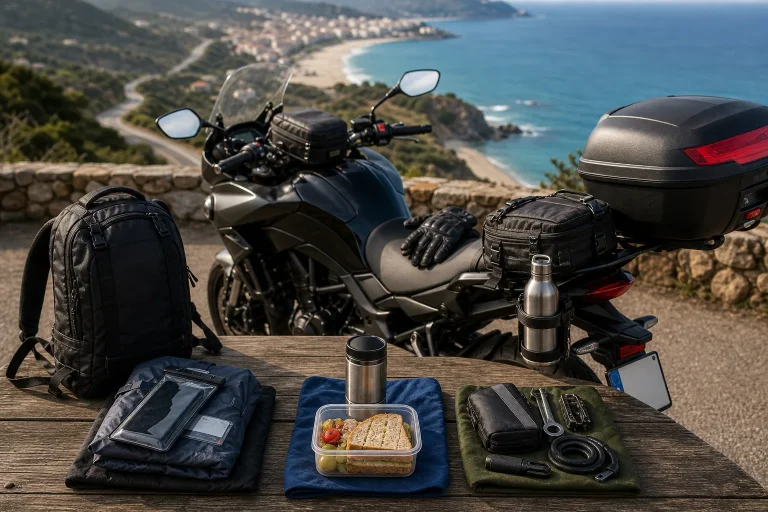
One Bag, One Ride: Packing Around What Must Stay Put
Choose a carry method by sorting your day-ride essentials into what needs quick access, what must…