The Throttle, the Grip, and the Small Movement Between Them
Learn what a motorcycle or scooter throttle does, how its layout can vary, and why the owner’s manual—not a familiar-looking grip—should guide you.
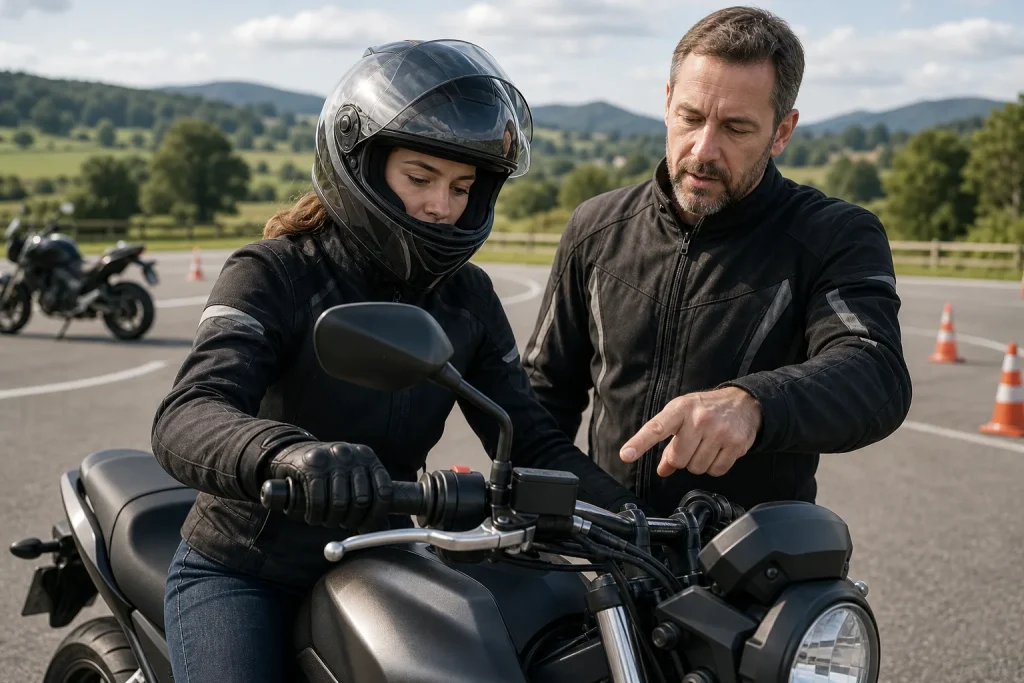
Which way should you turn the right-hand grip, and what should happen when you do? On many motorcycles and scooters, it is the throttle, but its layout and operation are not universal. Before touching an unfamiliar machine’s controls, check its owner’s manual or ask a qualified instructor to identify them. Never infer a control’s direction from another bike.
The grip’s job
On many conventional motorcycles, the throttle is built into the right-hand handlebar grip. Turning it in the direction specified by the manufacturer requests more drive; easing it towards its resting position requests less. The grip moves through a range rather than acting as a simple on-off switch.
A small change can make a subtle request, while a larger movement asks for more. The machine’s response depends on its design, gear, speed and conditions, so the same hand movement may feel different from one motorcycle to another. On an electric motorcycle or scooter, the grip may send an electronic signal instead of pulling a mechanical cable. Its exact operation remains model-specific.
At rest, the throttle should behave as described in the handbook. Follow the manufacturer’s instructions for any inspection. If the grip sticks, feels damaged or does not return as specified, do not ride until a qualified mechanic has checked it.
Power is not speed
It is tempting to think of the throttle as a speed control, but that is incomplete. It requests drive; the motorcycle’s speed then changes according to that request and other conditions, including the selected gear, slope, load and how the machine is already moving. On a scooter with automatic transmission, the relationship may feel more direct, but the throttle still does not select a particular speed.
Imagine a learner on a supervised practice area using a familiar training motorcycle. The instructor asks them to maintain a steady throttle opening on level ground, then repeat the exercise on a gentle incline. The input stays similar, but the motorcycle’s response may differ. The useful observation is that the grip requests drive while the machine’s speed depends on more than the grip alone. This is an invented illustration, not a riding instruction; practise only in a suitable setting under qualified supervision.
Closing the throttle reduces the request for drive, but it does not necessarily stop the motorcycle. It may continue rolling, and engine resistance may slow it somewhat. To slow down deliberately, use the brakes as taught by a qualified instructor.
Separate control jobs
The throttle is one of several distinct controls. The right-hand brake lever often operates the front brake, but layouts vary. Many motorcycles have a rear-brake pedal by the right foot; scooters may use a lever on the left handlebar or another arrangement. Check the handbook and identify the controls before riding.
On many manual motorcycles, the left-hand lever operates the clutch, which disconnects engine drive from the gearbox. A foot selector commonly changes gear. Automatic scooters generally do not require the rider to select gears in the same way. Confirm the arrangement on the machine in front of you rather than relying on habit.
Steering is a separate action from rotating the throttle. The grip is attached to the handlebar, so turning the bar changes direction; twisting the grip requests drive. Keeping those actions distinct helps prevent an unplanned hand movement from becoming an unintended steering input.
Calm, measured movement
A relaxed hand can make careful control easier. Hold the grip securely without clenching it. Keep your wrist comfortable and make any movement without pulling your whole arm around. Your posture depends on the machine and your body, so ask a qualified instructor to check it while you are learning.
For a stationary familiarisation exercise, use the manufacturer’s instructions and keep the engine off. Identify the throttle, then move it only as the manual permits; observe whether it moves and returns as specified. Do not twist the handlebars as part of the check. If anything feels sticky, damaged or unexpected, stop and arrange a professional inspection rather than trying to diagnose it yourself.
Riding practice is different: learn how the machine responds under qualified supervision in an appropriate training area. Keep throttle, braking and gear changes as distinct actions until your instructor teaches you how to coordinate them.
Check unfamiliar layouts
Motorcycles and scooters do not all share the same control layout. Some use a conventional twist grip; electric models may place drive modes or other switches nearby. A nearby button may alter a setting, but do not assume what it does. Consult the owner’s manual or ask the owner, dealer or instructor to identify it.
Before riding, sit on the machine with it safely secured and follow the manual’s familiarisation guidance. Identify the throttle, brakes, ignition and any mode controls. If a function or direction is unclear, do not guess; ask someone qualified to show you. A familiar-looking machine can still have a different arrangement.
Keep the throttle from turning accidentally while mounting or dismounting. If you need to reposition the machine, follow the manufacturer’s guidance and make sure you can manage its weight safely. Ask for help if you are uncertain.
Read the response
During supervised riding, think of throttle use as an input whose effect depends on the machine and conditions. Opening it as specified requests more drive; holding it steady maintains that request; easing it towards rest requests less. Keep your attention on the road and the wider riding environment rather than looking down at the controls.
On a manual motorcycle, the clutch and selected gear affect how drive reaches the wheel. An automatic scooter manages gear changes differently. Neither arrangement makes the throttle a substitute for the brakes. When you need to reduce speed, use the braking controls smoothly and follow your training.
Learn how the throttle should return and feel on your particular machine by checking its handbook. If its operation differs from the stated guidance, stop using it and arrange a qualified inspection. That model-specific check is more useful than assuming every right-hand grip turns or behaves in the same way.
Keep riding this thread
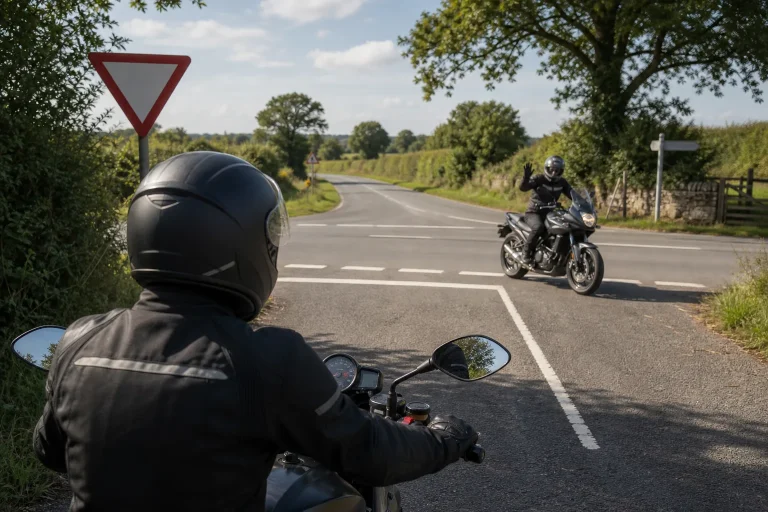
The Nod at the Junction: Courtesy Without Guesswork
A rider’s nod can be a friendly hello, but it cannot tell you who should go…
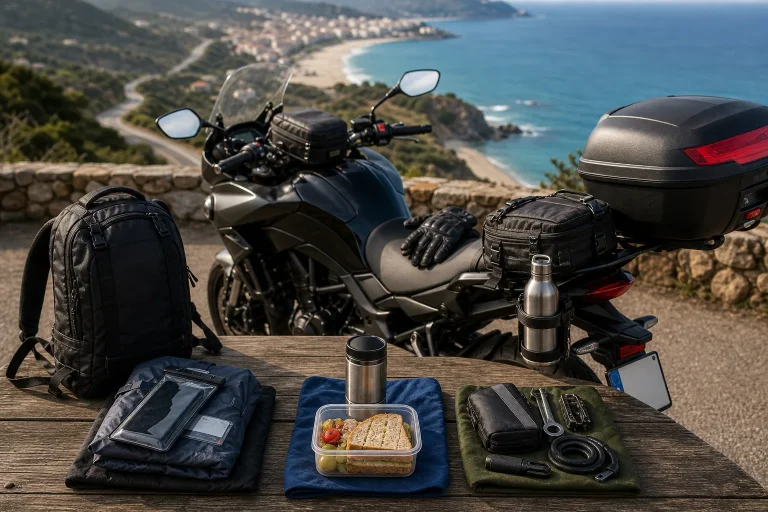
One Bag, One Ride: Packing Around What Must Stay Put
Choose a carry method by sorting your day-ride essentials into what needs quick access, what must…